
How To Groom A Senior Dog with care
smallseniordogs.com
Introduction
As dogs move into their senior years, grooming becomes more than just keeping them clean — it becomes an essential part of their comfort, health, and emotional well‑being. For small senior dogs especially, regular grooming can prevent discomfort, catch health issues early, and help them feel safe and cared for.
Let’s explore why grooming matters so much for aging pups and how you can make it a soothing, supportive experience.
💛 Grooming Changes as Dogs Age
Senior dogs experience physical changes that directly affect grooming comfort and safety. These changes aren’t just cosmetic—they influence mobility, skin health, and emotional well‑being.
- Thinning coats make them more vulnerable to cold, drafts, and rough brushing.
- Dry or sensitive skin reacts more strongly to shampoos, friction, and temperature changes.
- Reduced mobility makes standing, lifting paws, or turning difficult.
- Arthritis and joint stiffness increase discomfort during brushing, bathing, and nail trims.
- Higher matting risk occurs because seniors move less and often lie in one position longer.
- Temperature regulation issues mean warm water and warm rooms matter more than ever.
These changes mean grooming becomes a form of gentle health care rather than a routine chore.
✂️ Why grooming matters so much for senior dogs
1. Prevents painful mats and tangles
Mats pull on the skin, restrict airflow, and can hide infections. Seniors—especially small breeds with fine coats—develop mats faster because they’re less active and often curl up tightly when resting.
- Armpits
- Behind the ears
- Tail area
- Belly
Regular brushing keeps their coat soft and comfortable.
2. Supports skin health
Aging skin loses elasticity and moisture. Gentle brushing distributes natural oils, while regular checks help catch hot spots, dryness, or early signs of allergies.
- Dry skin
- Flakiness
- Sensitivity
- Hot spots
Gentle grooming helps distribute natural oils, soothe irritation, and spot issues early.
3. Helps regulate body temperature
Small senior dogs lose heat quickly. Clean, brushed fur traps warmth better, while removing excess undercoat in warmer months prevents overheating.
4. Makes movement easier
Long nails change how a dog walks, shifting weight onto joints and worsening arthritis pain. Regular trims reduce pressure and improve stability.
- Painful pressure on joints
- Difficulty walking
- Changes in posture
- Increased arthritis discomfort
Regular nail trims help your senior move more comfortably.
5. Allows early detection of health issues
Grooming is often the first time owners notice lumps, weight loss, dental changes, or ear problems. Early detection is especially important for seniors, who may hide discomfort.
- Lumps or bumps
- Skin infections
- Ear issues
- Dental problems
- Weight changes
- Parasites
Catching these early can make a huge difference in treatment and comfort.
6. Provides emotional comfort
Gentle grooming reassures older dogs who may feel anxious or confused. Predictable routines and soft handling help them feel safe.
🧴 Senior‑friendly grooming techniques
Check ears, teeth, and paws every session.
Regular grooming becomes more important as dogs age because it helps you notice subtle changes in their skin, coat, and overall comfort before they turn into bigger problems. It also keeps your senior dog feeling relaxed and supported, turning grooming into a gentle routine that strengthens your bond.
Go slow and let them set the pace.
Move slowly and give your senior dog time to adjust to each step so they never feel rushed or overwhelmed. Their joints may be stiff and their reactions slower, so letting them guide the pace keeps grooming comfortable and builds trust.
Use warm water and a warm room.
A warm room and warm water help senior dogs stay relaxed and comfortable during grooming, as older dogs struggle more to regulate their body temperature. The gentle heat also loosens stiff joints and muscles, making the whole process easier on their bodies and far less stressful overall.
Choose soft tools.
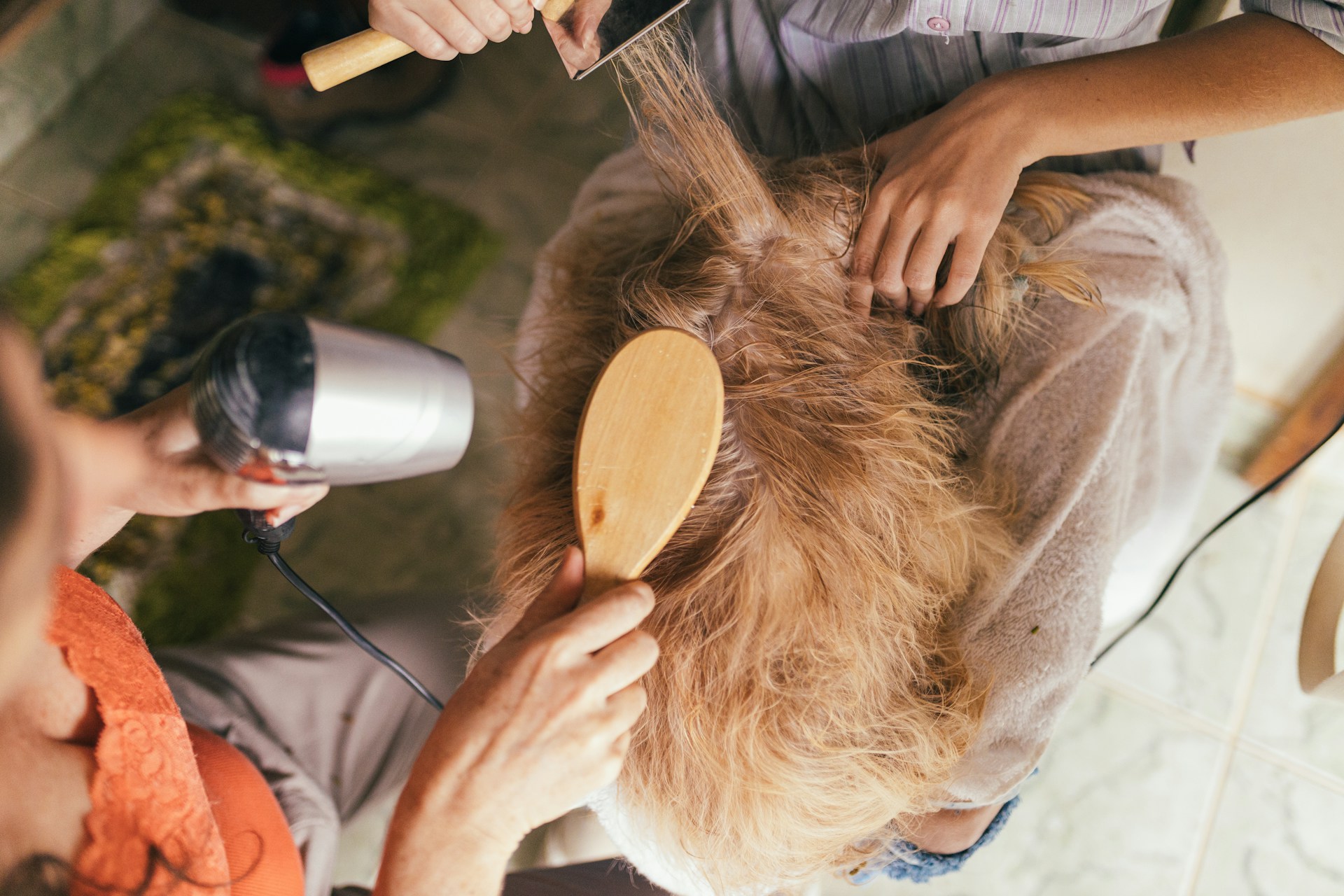
Soft grooming tools are much easier on a senior dog’s sensitive skin, which can become thinner and more delicate with age. Using gentle brushes, silicone gloves, or soft‑bristle combs helps you remove loose fur without causing irritation or discomfort, making grooming a calmer and more enjoyable experience for them.
Support their body.
Supporting their body helps reduce pressure on stiff joints and makes grooming much more comfortable for an older dog. Using a towel, cushion, or your arm to gently stabilize them prevents slipping or awkward positions, which helps them feel safer and more relaxed during the process.
Use non‑slip surfaces.
Using non‑slip surfaces keeps your senior dog steady and prevents slips that could strain their joints or cause a fall. A simple bath mat, rubber pad, or textured towel gives them secure footing, helping them feel safer and more confident during grooming.
Keep sessions short but frequent.
Keeping sessions short but frequent helps prevent your senior dog from becoming tired, stressed, or uncomfortable, especially if they have stiff joints or limited mobility. Breaking grooming into small, regular moments also builds a calm routine they can rely on, making the experience easier and more enjoyable over time.
Switch to a nail grinder.
Switching to a nail grinder is often gentler for senior dogs because it smooths the nail gradually instead of clipping it all at once, which can feel jarring to older, sensitive paws. It also gives you more control and reduces the risk of cutting the quick, making nail care safer and less stressful for both of you.
Consider sanitary trims.
Sanitary trims help keep the areas around your senior dog’s belly, rear, and inner legs clean, which is especially important if they have mobility issues or occasional incontinence. Keeping this fur short prevents mats, reduces odour, and makes it much easier for them to stay comfortable and hygienic between full grooming sessions.
🌟 The Bottom Line
Grooming isn’t just about appearance — it’s a vital part of caring for a senior dog’s health, comfort, and happiness. With gentle handling, the right tools, and a little patience, grooming becomes a loving ritual that helps your small senior feel safe, clean, and deeply cared for.
Related Articles:
Best Grooming Tools for Small Senior Dogs