
Mobility and the Aging Dog: Helping Your Senior Pup Stay Active, Comfortable, and Confident
smallseniordogs.com
Introduction
As dogs enter their golden years, their needs begin to shift—sometimes gradually, sometimes noticeably. One of the most common challenges pet parents face is senior dog mobility decline. Whether it’s stiffness after rest, hesitation on stairs, or a slower pace on walks, mobility issues in older dogs can affect their independence, comfort, and overall happiness.
The good news is that there are many ways to support mobility in the aging dog and help your senior companion stay active, safe, and confident.
🐾 Why Mobility Declines With Age
Just like humans, dogs experience natural physical changes as they grow older. Some of the most common causes of mobility problems in older dogs include:
- Osteoarthritis
A leading cause of joint pain in dogs, osteoarthritis is a degenerative joint disease that causes inflammation, stiffness, and discomfort. It’s extremely common in senior dogs, especially small breeds. - Muscle Loss
Reduced activity or chronic pain can lead to muscle atrophy, making movement more difficult. - Neurological Changes
Conditions like degenerative myelopathy or nerve compression can affect coordination and strength. - Obesity
Extra weight puts additional strain on joints, accelerating senior dog mobility decline. - Vision or Hearing Loss
Sensory changes can make dogs more hesitant to move around, especially in unfamiliar spaces.
Understanding the root cause helps you choose the right support plan for your dog.
🐶 Signs Your Senior Dog May Be Struggling With Mobility
Some signs are obvious, while others are subtle. Watch for:
- Slower rising from lying down
- Hesitation with stairs or jumping
- Shorter walks or lagging behind
- Slipping on smooth floors
- Stiffness after rest
- Reduced interest in play
- Difficulty squatting to potty
- Irritability when touched near joints
- Muscle loss in the hind legs
These are common signs of mobility decline in dogs, and early intervention makes a big difference.
🌿 Ways to Support Mobility in Aging Dogs
Supporting mobility isn’t about reversing age—it’s about improving comfort, confidence, and quality of life. Here are the most effective strategies.
🩺 1. Veterinary Care and Pain Management
A vet exam is the best starting point. They may recommend:
- Anti-inflammatory medications
- Joint supplements like glucosamine and chondroitin
- Omega‑3 fatty acids for joint support
- Pain management tailored to your dog’s needs
Addressing dog arthritis symptoms early can significantly improve mobility.
🏋️ 2. Gentle, Consistent Exercise
Movement keeps joints lubricated and muscles strong. Ideal senior dog exercise includes:
- Short, frequent walks
- Slow sniff walks
- Swimming or hydrotherapy
- Controlled indoor play
Avoid high-impact activities like jumping or rough play.
🧘 3. Physical Therapy and Rehabilitation
Canine rehab specialists can provide:
- Laser therapy
- Underwater treadmill sessions
- Massage
- Stretching routines
- Strength-building exercises
These therapies are excellent for senior dog joint support and overall mobility.
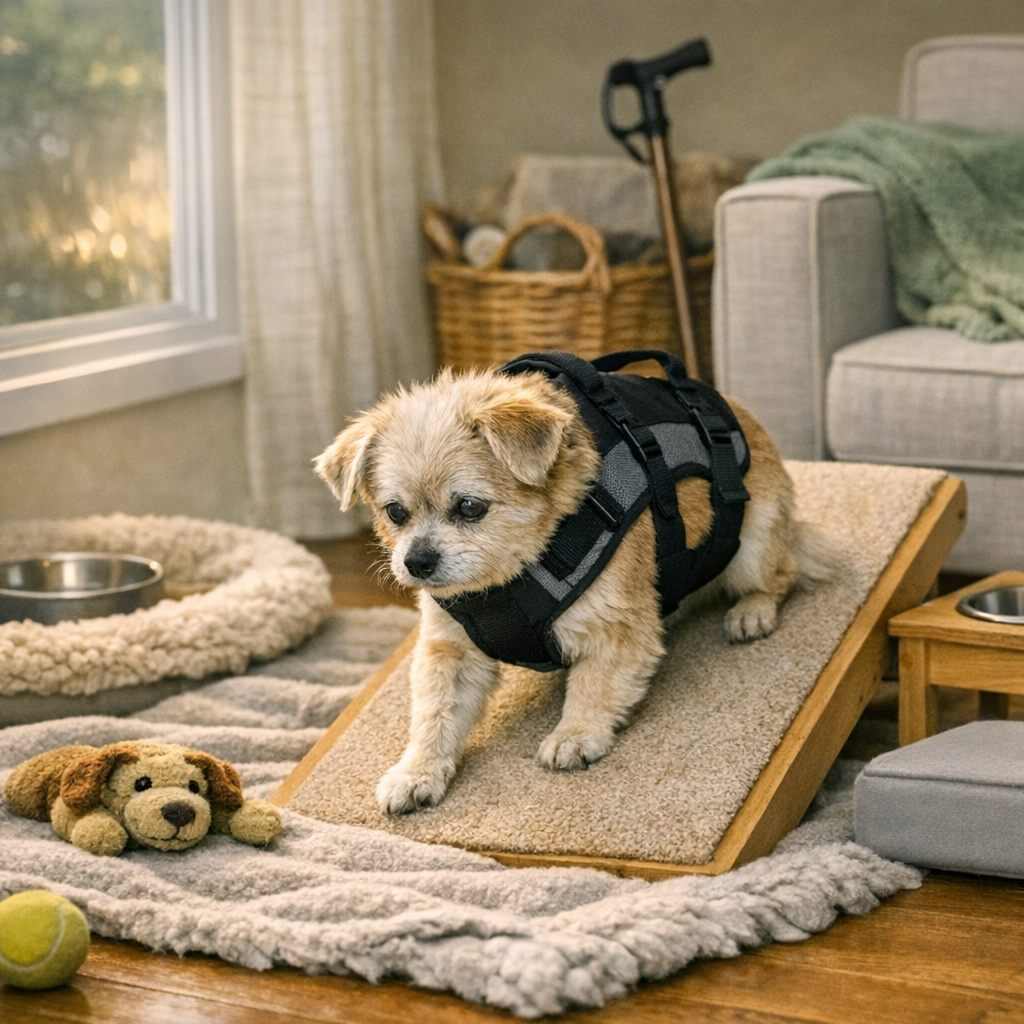
🛏️ 4. Home Modifications for Safety and Comfort
Small changes make a big difference:
- Non-slip rugs or mats on slippery floors
- Ramps or stairs for beds, couches, and cars
- Orthopedic beds for joint comfort
- Raised food and water bowls
- Night lights for dogs with vision loss
These home modifications for senior dogs help prevent falls and reduce strain.
🍗 5. Weight Management
Even a few extra pounds can worsen joint pain in dogs. A balanced diet, portion control, and appropriate exercise help keep your dog at a healthy weight.
💊 6. Supplements That Support Joint Health
Common supplements for dog arthritis treatment support include:
- Glucosamine & chondroitin
- Omega‑3 fatty acids
- Green-lipped mussel
- Turmeric (curcumin)
- Hyaluronic acid
Always check with your vet before starting new supplements.
🐕🦺 7. Mobility Aids
For dogs who need extra support:
- Harnesses with handles
- Dog ramps for older dogs
- Booties for traction
- Slings for stairs or outdoor potty breaks
These mobility aids for dogs help maintain independence and reduce stress.
❤️ The Emotional Side of Mobility Loss
Mobility changes can affect more than physical ability—they can impact a dog’s confidence and emotional well-being. You may notice:
- Increased clinginess
- Anxiety about being left alone
- Frustration when they can’t do what they used to
- Withdrawal from activities they once loved
Offering reassurance and maintaining routines helps your senior dog feel secure.
🌟 Quality of Life Matters Most
Mobility challenges don’t mean your dog’s joyful years are behind them. With the right care, many senior dogs continue to enjoy:
- Daily walks
- Playtime
- Snuggles
- Exploration
- Social time with family
Your support can make all the difference.
🐾 Final Thoughts
Aging is a natural part of your dog’s journey, and mobility issues in older dogs are often part of that process. But with attentive care, thoughtful adjustments, and a proactive approach, you can help your senior dog stay comfortable, confident, and engaged in the world they love.
Every step you take—whether it’s adding a ramp, adjusting their exercise routine, or offering a gentle massage—helps your senior dog enjoy their golden years with dignity and joy.