

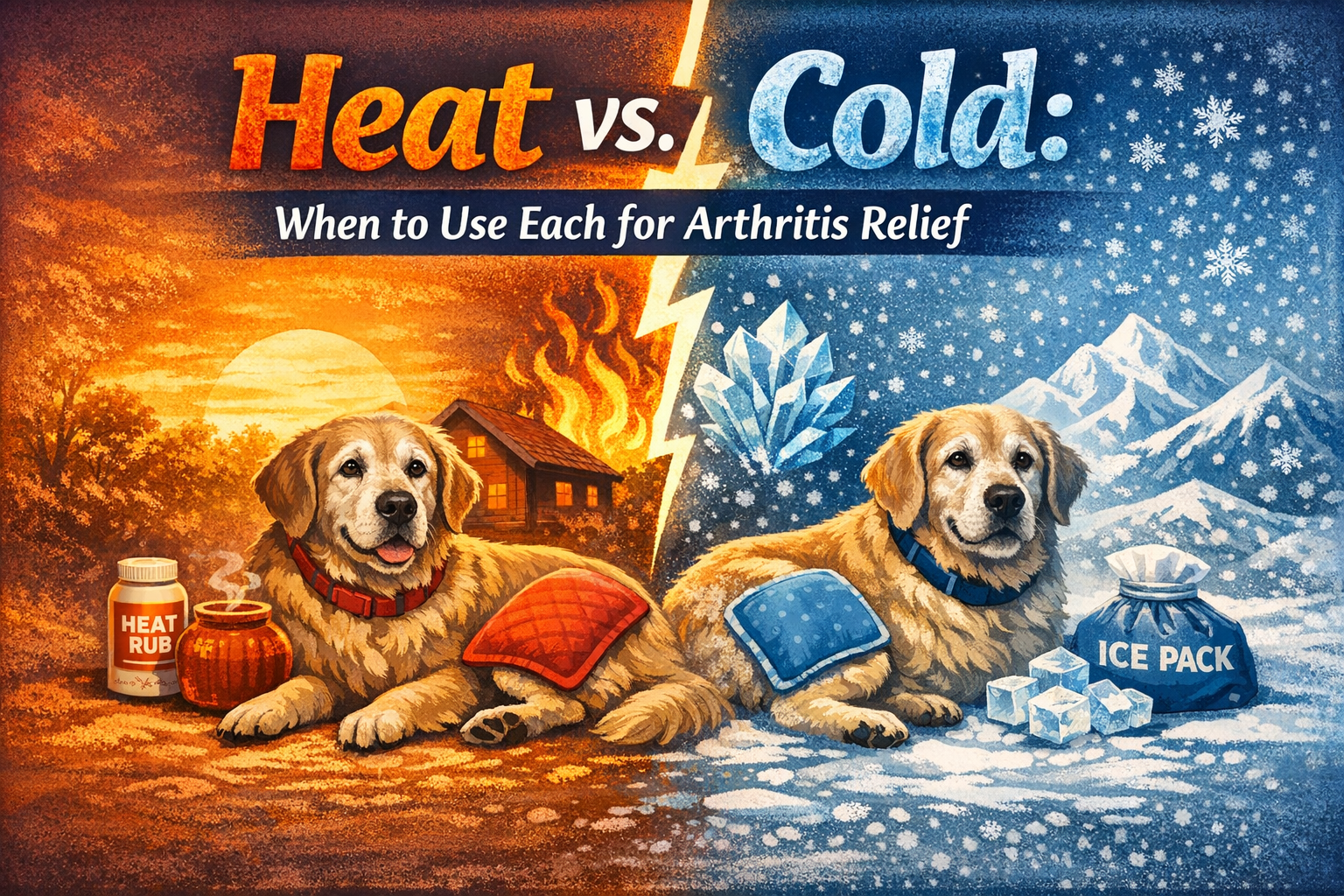
Heat vs. Cold: When to Use Each for Arthritis Relief
smallseniordogs.com
Introduction
Arthritis relief is one of the most common challenges senior dogs face, especially small breeds whose joints work hard to support their compact frames. When stiffness, swelling, or discomfort flare up, two simple tools can make a meaningful difference: heat and cold. Both can soothe arthritic joints, but they work in different ways — and knowing when to use each one helps you give your dog the safest, most effective relief.
Below is a clear, practical guide to help you decide whether warmth or cooling is the better choice for your dog’s symptoms.
🔥 When Heat Helps: Loosening Stiff, Achy Joints
Heat therapy is all about relaxation and improved mobility. Warmth increases blood flow, softens tight tissues, and helps joints move more comfortably. For many senior dogs, especially those who wake up stiff or slow to rise, heat can be a daily comfort ritual.
Best for:
- Morning stiffness
- Chronic, ongoing arthritis discomfort
- Tight muscles from overcompensating for sore joints
- Cold weather flare‑ups
Why it works:
Warmth dilates blood vessels, bringing oxygen and nutrients to the area. This helps muscles relax and reduces the “creaky” feeling that often comes with age.
How to use heat safely:
- Choose a low‑temperature heating pad designed for pets or a microwavable warm pack.
- Always wrap heat sources in a towel to avoid direct contact.
- Limit sessions to 10–15 minutes at a time.
- Stay with your dog — seniors, especially small breeds, can’t always move away if it gets too warm.
Great times to use heat:
Before a walk, after a nap, or during evening wind‑down time, many dogs love the ritual and visibly relax into it.
❄️ When Cold Helps: Calming Swelling and Inflammation
Cold therapy is the opposite: it reduces inflammation, numbs soreness, and helps control swelling. If your dog has a joint that suddenly looks puffy or warm to the touch, cold is the better choice.
Best for:
- Sudden flare‑ups
- Swollen joints
- After an unusually active day
- Post‑injury inflammation (with your vet’s guidance)
Why it works:
Cold constricts blood vessels, slowing circulation to the area. This reduces swelling and helps numb sharp or throbbing pain.
How to use cold safely:
- Use a soft ice pack, a bag of frozen peas, or a gel cold pack.
- Wrap it in a thin towel — never apply ice directly to your dog’s skin.
- Keep sessions short: 5–10 minutes is usually enough.
- Avoid cold therapy if your dog has circulation issues unless your vet approves.
Great times to use cold:
Right after a long walk, when a joint looks inflamed, or when your dog suddenly seems more tender than usual.
🐾 Heat or Cold? A Quick Rule of Thumb
If the joint is stiff, use heat.
If the joint is swollen, use cold.
Many senior dogs benefit from both, depending on the day. Some pet parents even alternate: cold first to reduce swelling, then gentle heat later to relax the area.
🛑 When to Skip Heat or Cold
Always check with your veterinarian if:
- Your dog has a new limp
- A joint is extremely swollen or hot
- Your dog yelps when touched
- There’s any sign of infection or injury
Heat and cold are supportive tools, not replacements for medical care — but they can make a big difference in daily comfort.
💛 Supporting Your Senior Dog’s Comfort
As our dogs grow older, comfort becomes more than a luxury—it’s a form of care. Whether you’re easing stiff joints with gentle warmth or calming inflammation with cool relief, the goal is the same: to help your senior dog feel safe, supported, and loved in every moment. With a few mindful adjustments and a lot of heart, you can turn everyday routines into small acts of kindness that make their golden years truly shine.
Related Articles:
Signs Your Small Dog Is Entering Their Senior Years
One response to “Heat vs. Cold: When to Use Each for Arthritis Relief”
[…] Heat vs. Cold: When to Use Each for Arthritis Relief […]